Elderberry
Sambucus nigra, family Adoxaceae. Part discussed: Fruit and flower.
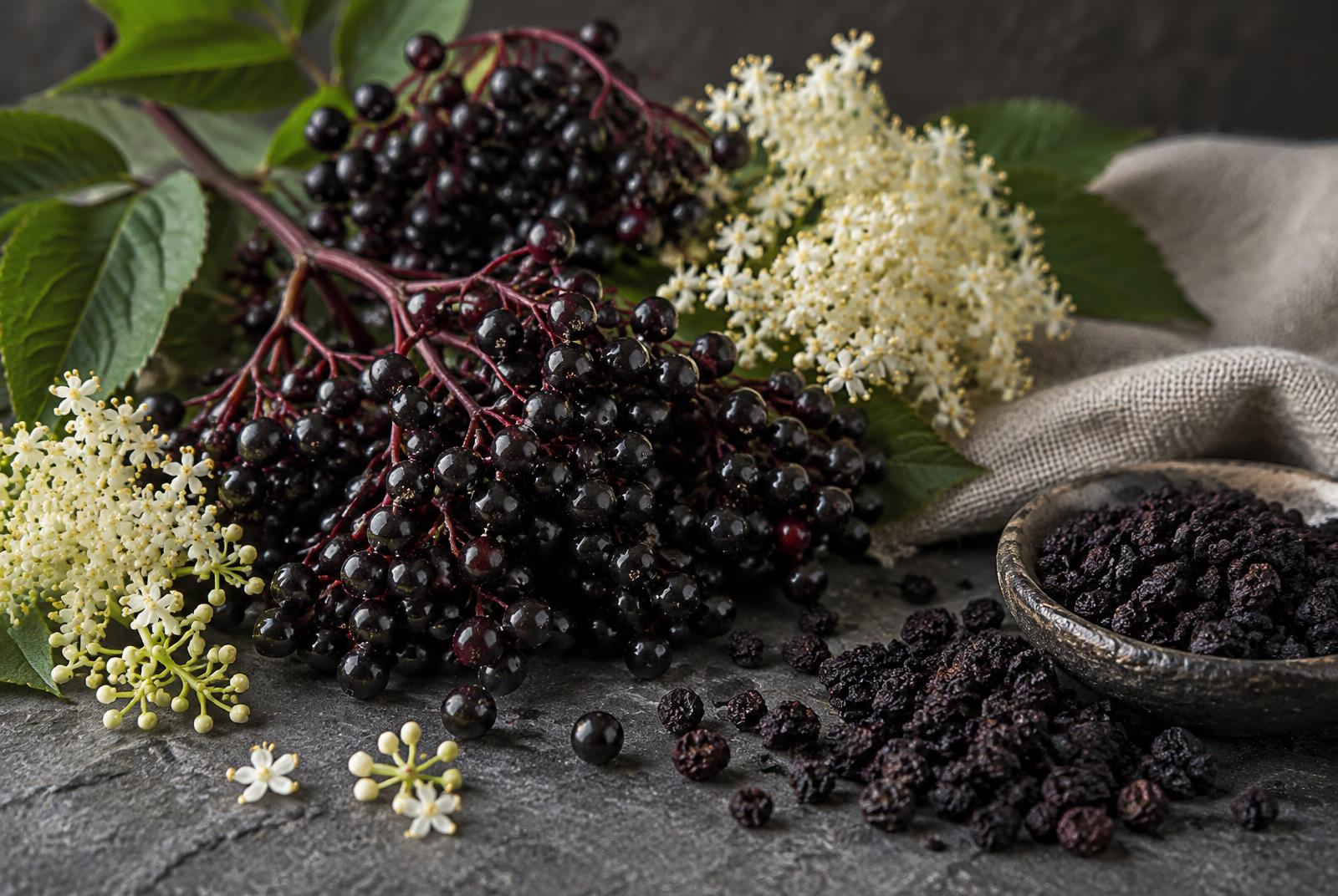
Identity
- Common name
- Elderberry
- Botanical name
- Sambucus nigra
- Family
- Adoxaceae
- Part or material
- Fruit and flower
- Classification
- Botanical
- Educational category
- Immune Education
About
Sambucus nigra L., Adoxaceae. The EMA flower monograph covers flos; the fruit page records that no monograph was adopted for fructus.
Forms and distinctions
Part scope is asymmetric.
Safety considerations
No side effects had been reported with elder flower medicines at assessment time. Raw or unripe elderberries and other parts of the elder tree such as leaves and stem contain poisonous cyanide-producing substances that can cause nausea, vomiting and severe diarrhea; cooking eliminates this toxin; large quantities may cause serious illness; little is known about safety in pregnancy or breastfeeding.
References
- EMA HMPC Sambuci flos · European Medicines Agency, herbal medicine monograph
- EMA HMPC Sambuci fructus · European Medicines Agency, herbal medicine monograph
- NCCIH Elderberry · US National Center for Complementary and Integrative Health
This entry is educational. It is not medical advice, not a diagnosis, and not a statement about any Pam Oh Herbs Collection or its contents. It carries no dosage and no claim of effect.